
Date of release: 31st March 2026
Step up for Brain Olympics!
A fun, free activity to give children’s brains a workout has been organised by Arts and Heritage volunteers in Wolverhampton this Easter break.
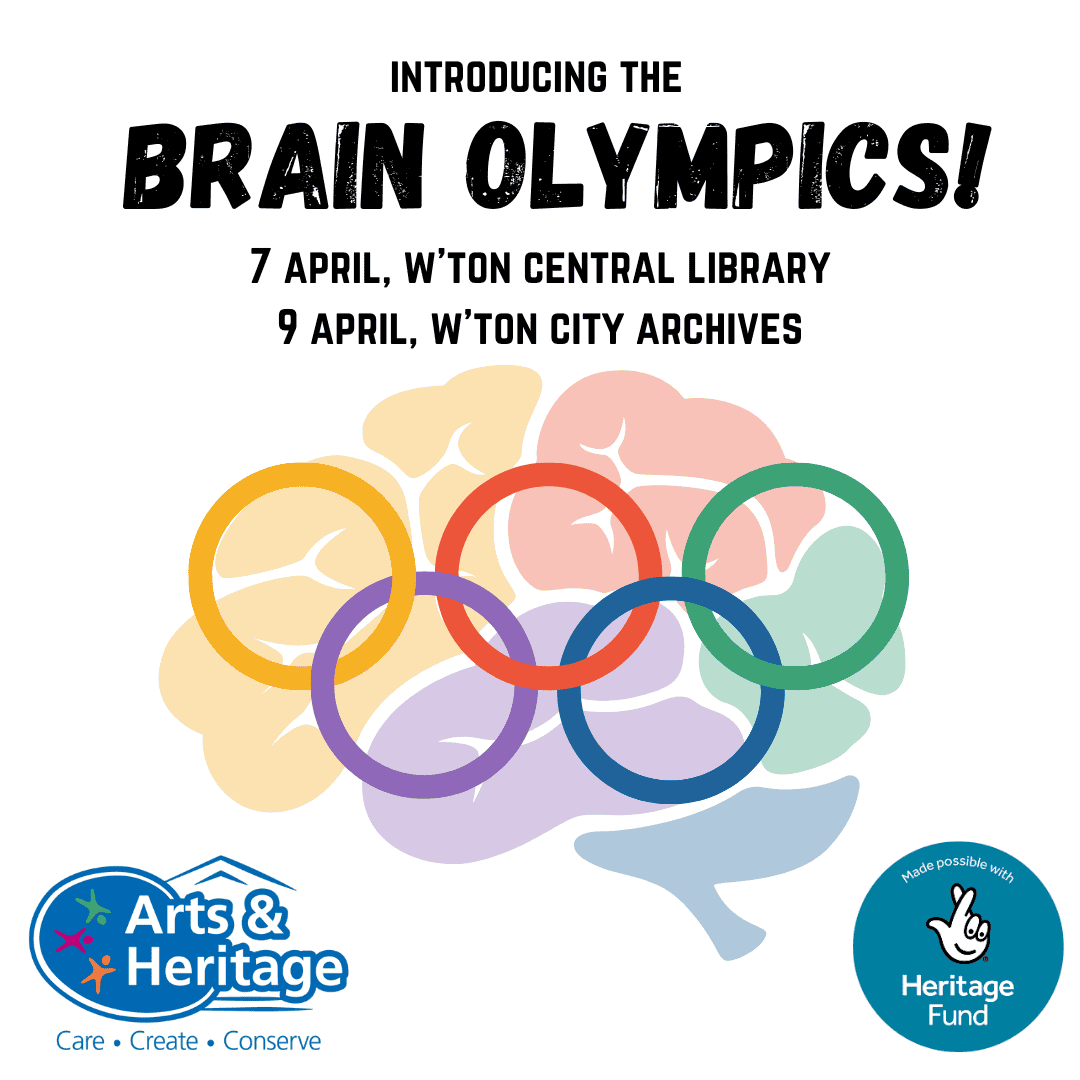
Brain Olympics will see two sessions run on Tuesday 7 April at Wolverhampton Central Children’s Library and on Thursday 9 April at Wolverhampton City Archives. Both sessions will start at 11am and finish at 2pm. Visitors do not need to book in advance, they can simply drop in and take part.
The volunteers are part of the Arts and Heritage Group of Your RWTC, The Royal Wolverhampton NHS Trust charity, and they have held similar events before, proving a popular draw for young people.
Next week’s sessions will give visitors the chance to have a go at five challenges testing all areas of the brain:
- ‘Touch and feel’ challenge to test the parietal lobe
- Give your frontal lobe a workout with our ‘guess the smell’ test
- Exercise your occipital lobe with our ‘spot the difference’ challenge
- How long can you hold a tree pose? Challenge your cerebellum with our ‘hold the pose’ yoga activity
- Test your temporal lobe with our memory challenge
Helen Steatham, who is one of the volunteers staging the sessions, said: “This is a fun and free session that really captivates young, enquiring minds.
“It’s aimed at children aged six and above and tests various functions of the brain including touch, smell, vision, memory and balance. And there’s a certificate and medal up for grabs too!”
Children and grown ups alike can also use the City Archives session to visit the heritage collection that is housed there and learn all about Wolverhampton’s healthcare in times gone by. The collection features medical artefacts, photographs, and memorabilia, housed within the archives at Molineux Hotel Building, Whitmore Hill, Wolverhampton, WV1 1SF.
Helen added: “The collection is really well worth a visit as it holds some fascinating items with wondrous tales behind them. We’re extremely proud of our rich, historical past and it’s an honour to be able to pass these stories on to future generations.”